
 By
The short answer: for a few hours, use a station coin locker (about ¥300–1,000 a day). If they're full, use a staffed counter or booked storage nearby. When you change cities, forward your big suitcase with takkyubin (宅急便, about ¥3,000–4,000, next day) and ride with a day bag. If you do take a big bag on the Tokaido/Sanyo/Kyushu Shinkansen and it's over 160 cm in total, reserve an oversized-baggage seat.
Coin locker
¥300–1,000 / day
Up to 3 days
Send it ahead
¥3,000–4,000
Takkyubin, arrives next day
Shinkansen limit
160 cm
Bigger? Reserve a seat
All prices are as of November 2026 and vary by station, operator, and distance.
コインロッカー
Coin Lockers: Sizes, Prices and Payment
Nearly every train station in Japan has coin lockers (コインロッカー, koin rokkā), and they're the cheapest way to drop a bag for the day. Sizes and prices differ by operator, but a typical bank looks like the table here. The catch is the extra-large size: a station may have only a handful, and a full-size checked suitcase won't fit anything smaller.
Paying: older lockers with a physical key take ¥100 coins only (most have a change machine nearby). Newer touchscreen lockers, which most big stations now have, accept IC cards like Suica, PASMO and ICOCA, and the card often doubles as your key. Some newer lockers also take credit cards or QR payments. Carry a few ¥100 coins anyway.
Time limits: lockers are a short-term service, usually up to 3 days. You pay for each extra day when you collect, and the "day" rolls over at a set time, often between midnight and 2 a.m. After the limit, the operator removes your things to a storage office and charges you for each day held. Many station lockers also lock up overnight when the station closes.
Small
Daypack, tote
¥300–500 /day
Medium
Carry-on suitcase
¥500–700 /day
Extra-large
Checked suitcase
¥700–1,000 /day
Typical prices as of November 2026. Extra-large lockers are the first to fill up at big stations.
Some operators now vary prices by time of day; the touchscreen shows the real price.
Finding a free locker
Coin Locker Navi (coinlocker-navi.com) maps lockers with their sizes, prices and hours, mostly in Tokyo and Osaka. It's in Japanese only, and live vacancy is shown for just a few locations, so treat it as a map rather than a guarantee. Some large JR East stations also have touchscreen locker-search panels that show which banks still have space. Otherwise, look for the locker signs (a key icon) and check each bank's screen.
手荷物預かり
When the Lockers Are Full: Luggage Storage
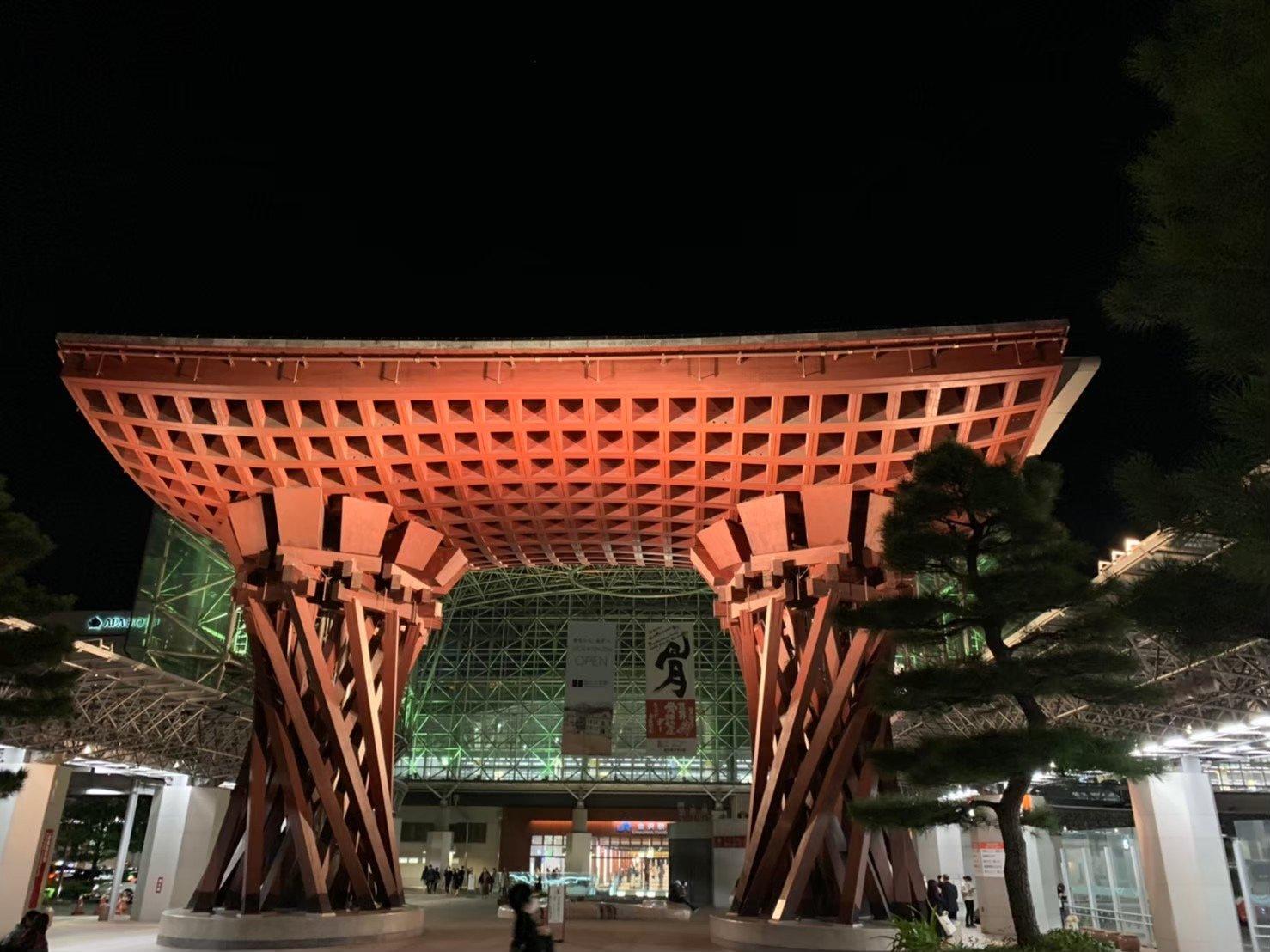
Staffed counters at major stations
Big hub stations, Tokyo Station included, have attended baggage counters (手荷物預かり所, tenimotsu azukarisho) that take bags of any size for a flat fee per piece, roughly ¥600–1,000 depending on size. Many can also forward bags to your hotel. They close in the evening, so check the hours on the station's website or the sign before you leave anything.
App-based storage in shops and hotels
Services like Radical Storage, ecbo cloak and similar apps let you book space in cafés, shops and hotels near stations, usually around ¥600–1,000 per bag per day. The big advantage is a guaranteed spot for a big suitcase, booked before you arrive. Check the opening hours of the exact location; they keep shop hours, not station hours.
Book luggage storage near the station
Affiliate links — we earn a commission at no extra cost to you.
宅急便
Luggage Forwarding (Takkyubin): Send Your Big Bag Ahead
Takkyubin (宅急便) is Japan's door-to-door parcel delivery, and Japanese travelers use it for suitcases, golf bags and skis all the time. The best-known company is Yamato Transport, the black cat logo, which brands it TA-Q-BIN in English and runs a "Hands-Free Travel" service for visitors. Sagawa Express offers a similar service with counters at airports and some stations.
Cost and timing: price depends on the bag's size (length + width + height) and the distance. Yamato's own example is one suitcase up to 160 cm in total from Tokyo to a Kyoto hotel from ¥3,160, delivered the next day. Expect roughly ¥3,000–4,000 for a big suitcase on the usual Tokyo–Kyoto–Osaka hops, and more to Hokkaido, Kyushu or Okinawa, which can take two days. Valuables, cash, passports and batteries shouldn't go in the bag.
The classic plan: send your big suitcase from your Tokyo hotel the morning you leave, and it's waiting at your Kyoto hotel the next day. You ride the Shinkansen with a day bag holding one night's clothes, chargers and medicine. It's cheap compared with a hotel room, and it removes both the locker problem and the oversized-seat problem.
Airports: Narita, Haneda, Kansai and other major airports have delivery counters (Yamato, Sagawa, JAL ABC and others) in the arrivals hall. Land, drop your suitcase, and it goes to your hotel, usually the next day. Some counters offer same-day delivery to central Tokyo hotels if you drop off in the morning. For your flight home, the hotel can send the bag to the airport counter; give your flight date, time and terminal, leave at least two days to be safe, and collect it before check-in.
Without a hotel desk: 7-Eleven and FamilyMart accept Yamato parcels, and Yamato's own offices do too. The slip is in Japanese, so the hotel front desk is the easiest route if you have one.
Ask the front desk the day before (or that morning)
Most hotels handle Yamato's TA-Q-BIN at the desk. Tell them where it's going and when you arrive there. They'll give you a slip and often help fill it in.
Address it to your next hotel, in your name
Use the hotel's address and phone number, your full name as on the booking, and your check-in date. Staff commonly add 宿泊者 (shukuhakusha, "hotel guest") so the receiving desk knows to hold it.
Pay and keep the receipt
Payment is usually at the desk (cash, sometimes card) when you hand it over. The slip has a tracking number.
Check before you send
Make sure the receiving hotel will accept a parcel before you arrive. Most do, but small guesthouses and rental apartments with no staffed desk often can't.
What to say at the front desk
この荷物を宅急便で送りたいです。
Kono nimotsu o takkyūbin de okuritai desu.
I'd like to send this bag by takkyubin.
明日、京都のホテルに届けてください。
Ashita, Kyōto no hoteru ni todokete kudasai.
Please deliver it to my hotel in Kyoto tomorrow.
宅急便の荷物は届いていますか?
Takkyūbin no nimotsu wa todoite imasu ka?
Has my takkyubin bag arrived? (at the next hotel)
Simply saying "Yamato" or "takkyubin" and pointing at the suitcase works at almost any hotel.
特大荷物
Big Suitcases on the Shinkansen: The 160 cm Rule

On the Tokaido, Sanyo, Kyushu and Nishi-Kyushu Shinkansen (Tokyo–Kyoto–Osaka–Hiroshima–Fukuoka and on to Kagoshima and Nagasaki), bags are sorted by the sum of length, width and height:
Add up length + width + height of your bag:
Up to 160 cm
No booking needed
Overhead rack or at your feet
161–250 cm
Reserve an oversized-baggage seat
Free if reserved. Without one: ¥1,000 fee
Over 250 cm
Not allowed on board
Send it with takkyubin instead
The oversized seat costs nothing extra beyond a normal reserved seat. Book it online, at a ticket machine, or at a ticket counter, up to one month ahead; on busy dates these few seats sell out first. Board with an oversized bag and no reservation and you pay a ¥1,000 fee and put it where the conductor tells you. Strollers, sports gear and musical instruments are exempt from the rule. Some 16-car trains on the Tokaido and Sanyo lines also have lockable oversized baggage compartments (lower level 80 × 60 × 40 cm), on a no-reservation trial since July 2025. Check whether it's still running.
Measure your suitcase
A cabin-size carry-on is around 115 cm in total, so it's always fine. The largest checked suitcases (roughly 29 inches and up) often go past 160 cm once you include wheels and handles. Measure yours at home.
Other lines
JR East's Shinkansen (Tohoku, Hokuriku, Joetsu and others) and ordinary trains don't require an oversized-baggage reservation. You still need to find space for the bag, and a big suitcase in a packed commuter train is no fun for anyone.
Quick decision
Your Situation → Best Option
A few hours in a city between check-out and a train
→ Coin locker at the station; if full, an app-booked storage spot nearby
Big suitcase, arriving at Tokyo Station or Kyoto Station mid-morning
→ Skip the locker hunt: book storage ahead, or use a staffed baggage counter
Moving hotel to hotel, e.g. Tokyo → Kyoto
→ Forward the big bag with takkyubin, travel with a day bag
Must keep your big suitcase on the Shinkansen (Tokaido/Sanyo/Kyushu)
→ Reserve a seat with an oversized baggage area if it is over 160 cm
Landing with lots of luggage, going straight to sightsee
→ Airport delivery counter: send bags to your hotel
Last day before your flight
→ Send bags from the hotel to the airport, leaving at least two days
| Your situation | Best option |
|---|---|
| A few hours in a city between check-out and a train | Coin locker at the station; if full, an app-booked storage spot nearby |
| Big suitcase, arriving at Tokyo Station or Kyoto Station mid-morning | Skip the locker hunt: book storage ahead, or use a staffed baggage counter |
| Moving hotel to hotel, e.g. Tokyo → Kyoto | Forward the big bag with takkyubin, travel with a day bag |
| Must keep your big suitcase on the Shinkansen (Tokaido/Sanyo/Kyushu) | Reserve a seat with an oversized baggage area if it is over 160 cm |
| Landing with lots of luggage, going straight to sightsee | Airport delivery counter: send bags to your hotel |
| Last day before your flight | Send bags from the hotel to the airport, leaving at least two days |
Common Questions
How much does a coin locker cost in Japan?
As of November 2026, station coin lockers typically cost about ¥300–500 per day for a small locker and around ¥700–1,000 for an extra-large one that fits a full-size suitcase. Prices vary by station and operator, and the fee rolls over at a set time each night, so check the label or touchscreen. Most lockers can be used for up to 3 days.
How much does luggage forwarding (takkyubin) cost in Japan?
Yamato Transport's own example is one large suitcase (size 160, up to 160 cm total) from Tokyo to a Kyoto hotel from ¥3,160, arriving the next day. Expect roughly ¥3,000–4,000 per big suitcase on common routes as of November 2026, less for smaller bags and more for long distances like Hokkaido or Okinawa.
Do I need to reserve a seat for a big suitcase on the Shinkansen?
On the Tokaido, Sanyo, Kyushu and Nishi-Kyushu Shinkansen, yes, if your bag's length, width and height add up to more than 160 cm (up to 250 cm). Reserve a seat with an oversized baggage area at no extra charge. Without one you pay a ¥1,000 fee and must put the bag where the conductor says. Bags over 250 cm aren't allowed at all.
What do I do if all the coin lockers are full?
Big stations usually have a staffed baggage counter that takes suitcases for a per-bag fee, and app-based services (such as Radical Storage, ecbo cloak and others) let you book space in nearby shops and hotels. Booking ahead is the safest option at busy stations like Tokyo and Kyoto in the late morning.
How do I send my luggage to the airport in Japan?
Ask your hotel front desk to send it by takkyubin to your departure airport (Narita, Haneda, Kansai and other major airports have counters), giving your flight date, time and terminal. Leave at least two days to be safe, then collect the bag at the airport counter before check-in.
Related guides
Read next
Shinkansen from Tokyo to Kyoto →
Which train to take, which side to sit for Mt. Fuji, and how to book.
Narita vs Haneda →
Which Tokyo airport is better for your trip, and how to get into the city.
Japan packing list →
Pack smaller and the whole luggage problem gets easier.
10-day Japan itinerary →
A first-trip route with natural points to forward your bags ahead.