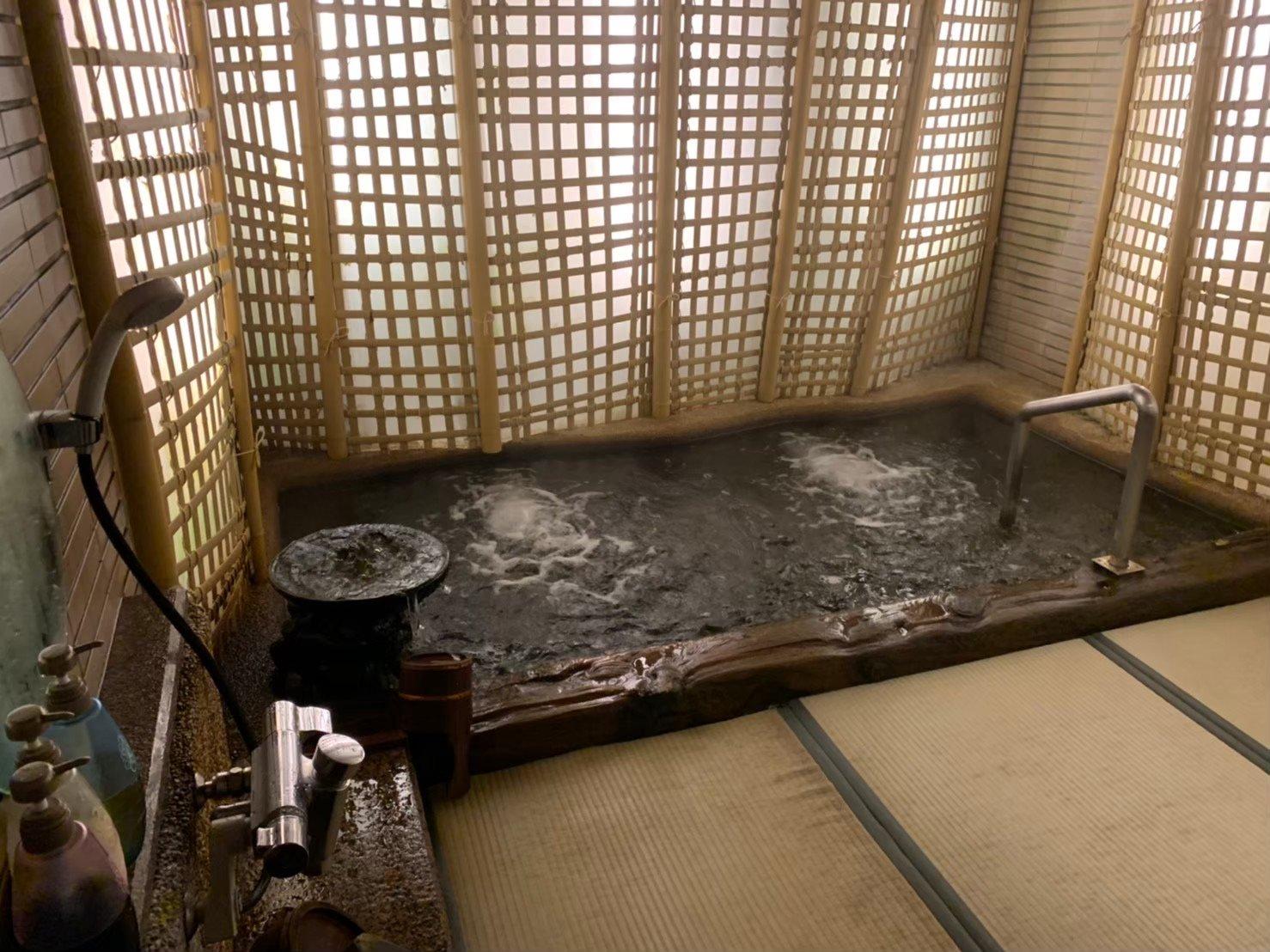
 By
The short answer: take your shoes off at the door, wear the yukata left over right, and be on time for dinner. In the onsen, wash before you get in, bathe naked, and keep the small towel and your hair out of the water. If you have tattoos, book a ryokan with a private bath (in your room or a reservable kashikiri bath) and check the policy before you pay.
Typical cost
~¥15,000+ pp
JNTO average, 2 meals incl.
Dinner
Set time slot
Pick it at check-in
Onsen rule #1
Wash first
Then soak, nude
Tattoos?
Private bath
Kashikiri or in-room
All information is as of November 2026. Rules, hours and prices vary by ryokan; your inn's own instructions always win.
Find a ryokan for your dates
Affiliate links — we earn a commission at no extra cost to you.
旅館の一日
A Ryokan Stay, From Check-in to Check-out
A ryokan (旅館) is a traditional Japanese inn: tatami rooms, futon bedding, a cotton yukata to wear, and usually dinner and breakfast in the price. Most in onsen towns have hot spring baths. If you're still deciding whether to stay in one at all, see ryokan vs hotel.
Shoes off at the entrance
Step out of your shoes in the entrance area (genkan) and into the slippers provided. Slippers come off again before you step onto tatami: walk on tatami in socks or bare feet only. There are separate toilet slippers inside the toilet room; leave them there.
Tea, a quick tour, and your dinner time
Staff often show you to your room and serve green tea with a small sweet. This is when you'll usually be asked to choose a dinner time and breakfast time, and told the bath hours and the private-bath booking system.
Change into the yukata and take a first bath
The cotton yukata in your room is for wearing around the inn, to the baths and (at most ryokan) to meals. Wrap the left side over the right. Right over left is how the dead are dressed for funerals, so this is the one rule that really matters.
Kaiseki dinner, on time
Dinner is a multi-course kaiseki meal served course by course, either in your room or in a dining room. The kitchen plans every course around the time you chose, so arrive on time; if you're running late, phone the inn.
Futons appear
At traditional ryokan, staff clear the low table and lay out futons while you're at dinner or in the bath. Some modern ryokan have beds or leave the futons for you to lay out.
Bath, breakfast, check-out
Many guests take a morning bath, since baths are usually open late at night and again from early morning. Breakfast is Japanese-style at a set time, and check-out tends to be earlier than at hotels, often around 10 a.m. Leave the yukata in the room.
Why dinner time matters so much
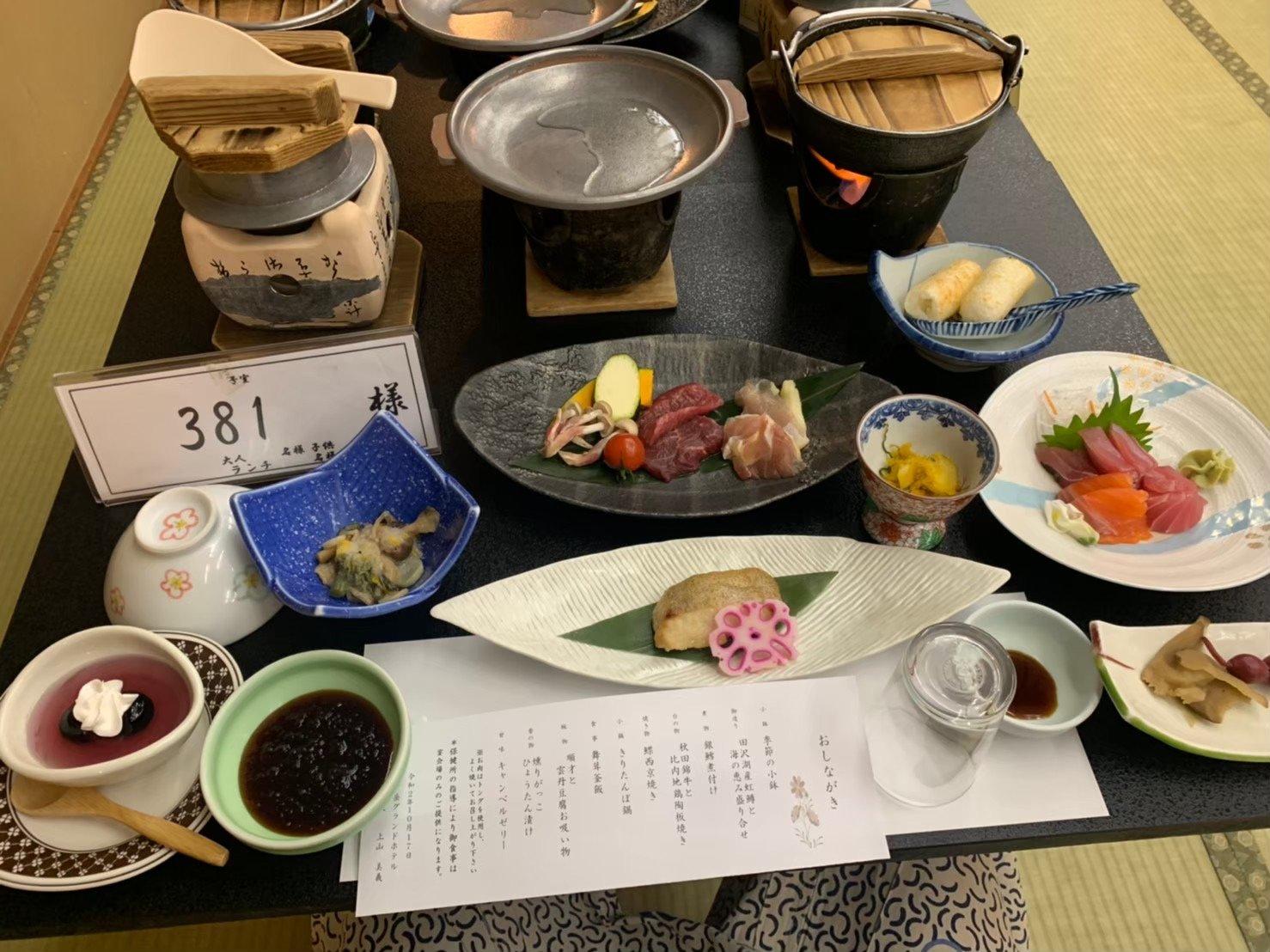
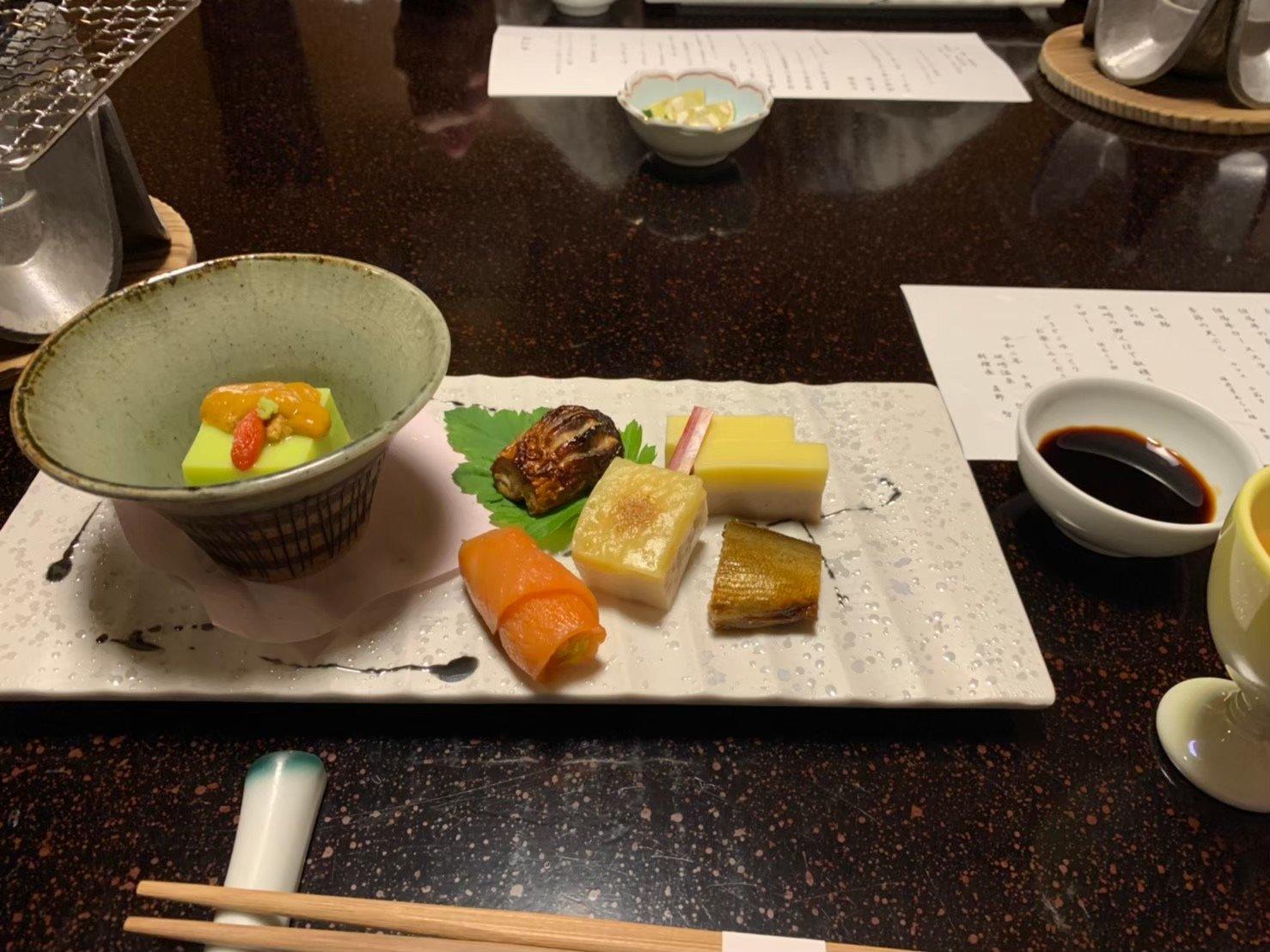
Kaiseki isn't a buffet. Courses (appetizers, sashimi, a grilled or simmered dish, something cooked at the table, rice and soup, dessert) are prepared and brought out in sequence for your slot. Many ryokan also set a latest check-in time for guests on dinner plans, and if you arrive after it, there may be no dinner at all. If your train is delayed, call ahead.
会席料理
What Dinner and Breakfast Look Like
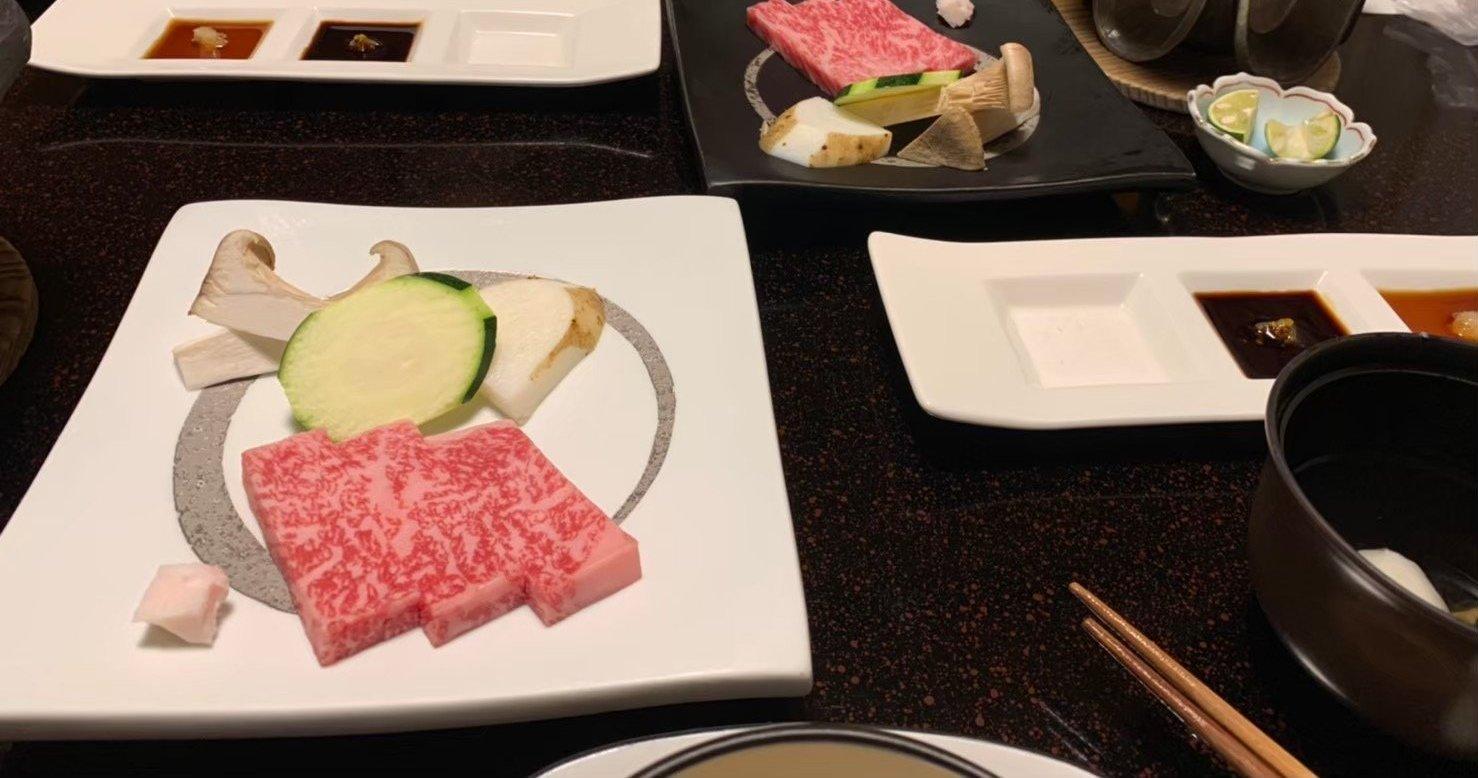
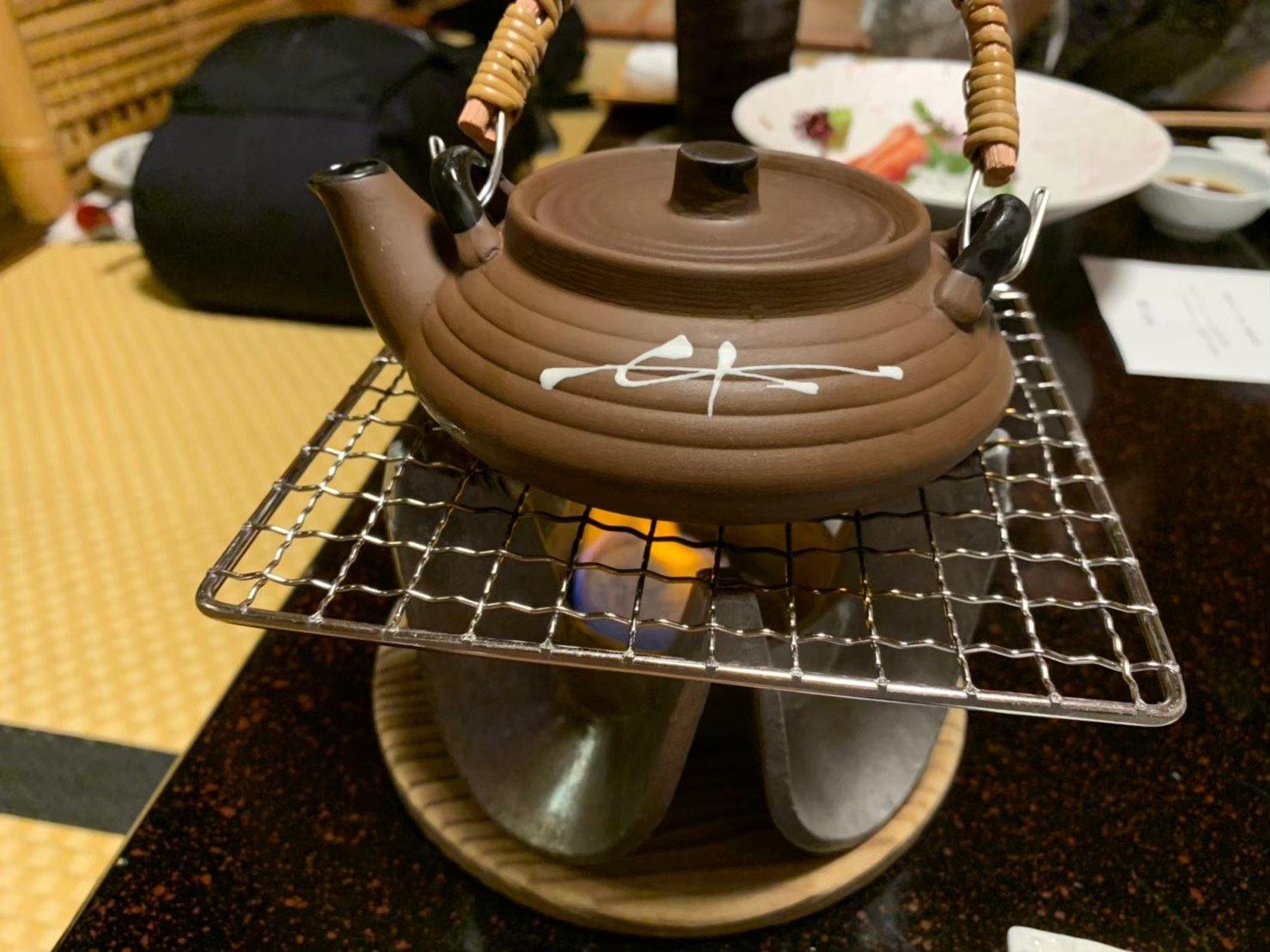
Dinner is usually served either in your room (heya-shoku, 部屋食) or in a dining room, sometimes in a private booth. Expect a printed menu card, a small burner for a hot pot or for grilling meat at the table, and many small plates. Tell the ryokan about allergies and dietary needs when you book, not at the table; vegetarian and halal requests are hard to handle on the day. Breakfast is typically Japanese: rice, miso soup, grilled fish, pickles and small side dishes, at a time you choose the night before.
入浴の流れ
How to Use an Onsen, Step by Step
Find the right curtain
Baths are separated by gender. Read the kanji on the noren curtain: 男 = men, 女 = women. Colors are often blue for men and red for women, but that isn't a rule, and some inns swap the men's and women's baths between evening and morning.
Undress fully in the changing room
Put everything, swimsuit included, in a basket or locker. Bathing is nude. Take only the small towel with you.
Wash first, sitting down
Sit on a stool at a shower station and wash your whole body and hair with the soap and shampoo provided. Rinse off all the suds, and rinse the stool when you're done.
Hair up, towel out of the water
Tie long hair up so it doesn't touch the water. Don't put the small towel in the bath; fold it on your head or leave it on the side.
Soak quietly
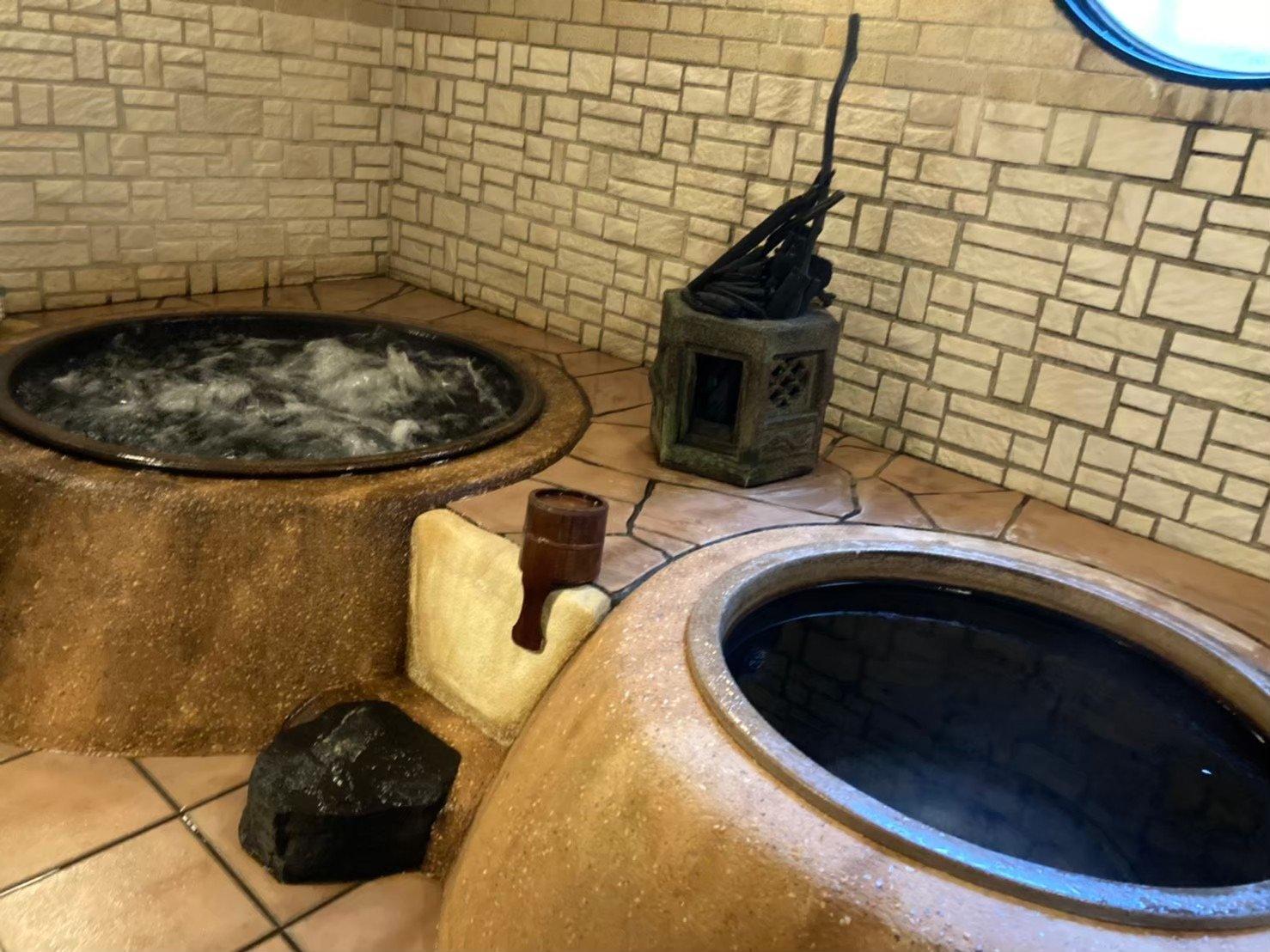
Lower yourself in slowly. No swimming, splashing or diving, and keep your voice down. Water is hot (often around 40–42°C), so get out and cool down if you feel dizzy, and drink water before and after. Skip the bath after drinking alcohol.
Dry off before the changing room
Wipe yourself down with the small towel before stepping back into the changing room, so the floor stays dry. Many people don't rinse after the final soak, to keep the minerals on the skin.
男
otoko · men
女
onna · women
Blue and red curtains are common but not standard. Read the character, not the color, and check again in the morning: some inns swap the two baths overnight. You may also see 殿方 (tonogata, gentlemen) and 婦人 (fujin, ladies).
JNTO's own onsen etiquette guide covers the same rules and suggests keeping each soak to around 30 minutes at most.
タトゥー
Onsen With Tattoos: Your Real Options
Tattoos have long been associated with organized crime in Japan, and many baths still have a blanket "no tattoos" rule, whether yours is a small flower or a full sleeve. In a 2015 Japan Tourism Agency survey of hotels and ryokan, about 56% of those that responded said they refused tattooed guests in their shared baths, about 31% accepted them, and about 13% accepted them if the tattoo was covered. In 2016 the agency asked the industry to find ways to accommodate visitors, giving examples like cover stickers, quieter time slots and private baths. Policies have loosened in places since, but there's no single national rule: each facility decides.
1. A room with its own bath
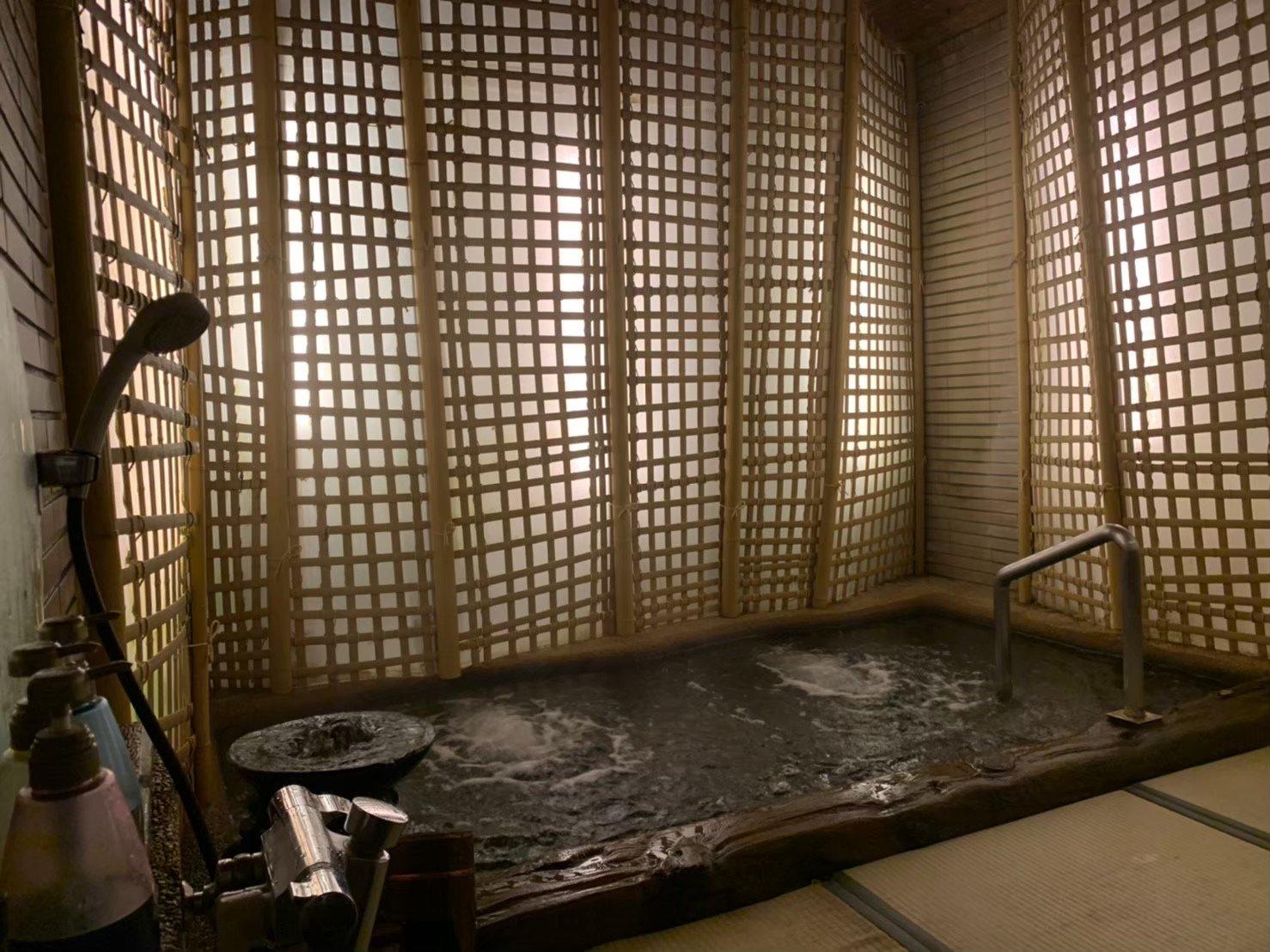
The surest option. Many ryokan have rooms with a private indoor or open-air bath (客室露天風呂, kyakushitsu roten-buro). Nobody else uses it, so tattoos are never an issue. It's the most expensive option.
2. A private reservable bath (kashikiri)
Many ryokan have one or more kashikiri-buro (貸切風呂) you can lock for 40–60 minutes, sometimes free, sometimes for a fee. Ask whether it needs a booking and whether tattooed guests may use it; it's usually fine.
3. Cover it, where that's allowed
Some facilities accept small tattoos covered by a skin-colored cover sticker (tattoo seal). Some sell them at the front desk. A sticker only helps if the facility says so, and large tattoos generally can't be covered.
4. A tattoo-friendly facility
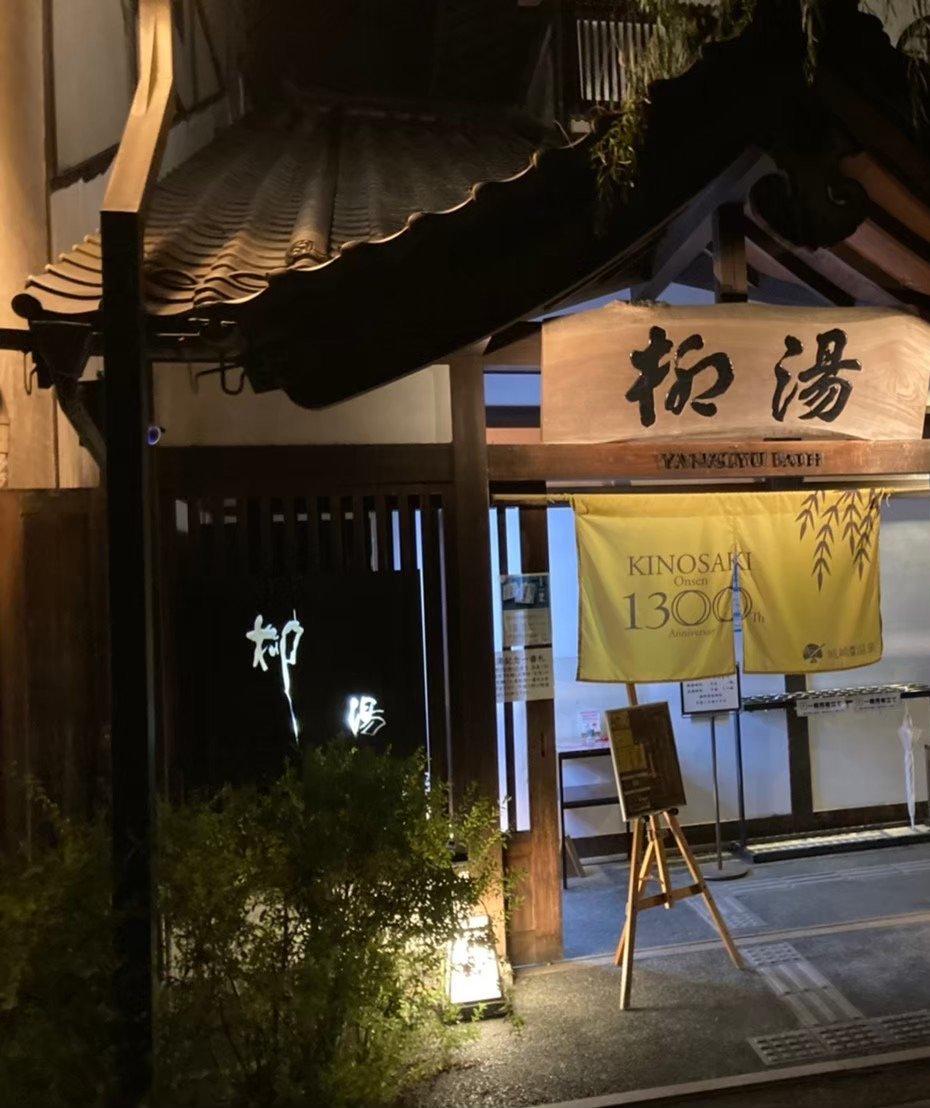
Some towns and baths openly welcome tattoos. Kinosaki Onsen's official site says all seven of its public bathhouses accept tattoos of any size, uncovered (ryokan baths there set their own rules). Check the facility's own website for its current policy, since policies change.
Where to check
- The facility's own website or booking page (search for "tattoo" or タトゥー / 入れ墨).
- Visit Kinosaki for Kinosaki's public baths.
- JNTO's onsen and tattoo guide for the general options.
- Before you book, email the ryokan the phrase below. A written yes beats a third-party list.
よくある失敗
Etiquette Mistakes First-Timers Make
✕ Wearing a swimsuit into the bath
→ Bathing is nude. A swimsuit is only for the rare mixed baths or spa parks that ask for one.
✕ Getting in before washing
→ Wash your whole body at the shower stations first. Rinsing with a bucket of bath water isn't enough.
✕ Dipping the towel in the water
→ Keep the small towel out of the bath. Put it on your head or on the edge.
✕ Walking on tatami in slippers
→ Slippers come off at the edge of the tatami. Socks or bare feet only.
✕ Wrapping the yukata right over left
→ Left side over right. The other way is for the dead.
✕ Turning up late for dinner
→ The courses are timed to your slot. Call the inn if you'll be late.
✕ Taking photos in the bath
→ Never photograph in a shared bath or changing room, even if it looks empty.
✕ Wearing the toilet slippers back out
→ Leave them at the toilet door for the next person.
No tipping is expected at ryokan. For the wider set of manners (trains, temples, restaurants), see the Japan etiquette checklist.
料金
What a Ryokan Costs
Ryokan prices are per person, not per room, and normally include dinner and breakfast (1泊2食, ippaku nishoku). Two people in one room pay twice the listed per-person rate, so compare carefully against hotel room prices. JNTO puts the average around ¥15,000 per person per night. Treat that as a floor rather than a typical price for popular onsen towns: weekends, holidays, rooms with a private bath and in-room dining all push the price up, and luxury ryokan charge several times as much.
On top of the room rate: a hot spring bathing tax (入湯税, nyūtō-zei), usually ¥150 per person per night, and in some places a local accommodation tax. Drinks at dinner and kashikiri bath fees are usually charged separately at check-out. Prices here are as of November 2026; check the exact plan for your dates.
Ryokan stays usually mean lighter luggage too: you won't need pajamas, and many inns provide toiletries. See the packing list, and if you're moving between cities, consider sending your big suitcase ahead. Rural ryokan are rarely near a station locker.
旅館の選び方
How to Pick a Ryokan
Private bath in the room: look for "room with open-air bath" or 客室露天風呂. Check whether it's real hot spring water or ordinary heated water; listings usually say.
Kashikiri baths: check how many there are, whether they're free, and whether they're first-come or booked. One private bath shared by a 40-room inn can mean a long wait.
Dinner in your room vs a dining hall: in-room dining is the classic experience and very private, but costs more. A dining room or private booth is common now and perfectly good.
Solo travelers: search with one adult; fewer ryokan accept single guests, and those that do often charge a solo supplement.
Western beds: if sleeping on a futon is a problem, filter for "Japanese-Western room" (和洋室), which has beds and a tatami area.
Quick decision
Your Situation → Best Choice
You have visible tattoos
→ A ryokan with a private in-room bath or a bookable private bath (kashikiri). Ask before booking.
You're shy about bathing naked with strangers
→ Book a room with its own bath, or a ryokan with a kashikiri bath you can reserve by the hour.
Couple or family who want to bathe together
→ Kashikiri (private) bath or room with a bath. Shared baths are gender-separated.
Solo traveler
→ Filter for single-occupancy plans; many ryokan price for two. Larger inns and business-style onsen hotels take solo guests more often.
You want the full kaiseki experience in private
→ A plan with dinner served in your room (heya-shoku, 部屋食).
Tight budget or late arrival
→ A breakfast-only or room-only plan, and eat in town. You miss kaiseki, but you still get the baths.
First onsen trip from Tokyo, one night
→ Hakone: easy to reach, lots of choice at every price.
You want to walk between public baths in a yukata
→ Kinosaki Onsen: seven public bathhouses in one small town.
| Your situation | Best choice |
|---|---|
| You have visible tattoos | A ryokan with a private in-room bath or a bookable private bath (kashikiri). Ask before booking. |
| You're shy about bathing naked with strangers | Book a room with its own bath, or a ryokan with a kashikiri bath you can reserve by the hour. |
| Couple or family who want to bathe together | Kashikiri (private) bath or room with a bath. Shared baths are gender-separated. |
| Solo traveler | Filter for single-occupancy plans; many ryokan price for two. Larger inns and business-style onsen hotels take solo guests more often. |
| You want the full kaiseki experience in private | A plan with dinner served in your room (heya-shoku, 部屋食). |
| Tight budget or late arrival | A breakfast-only or room-only plan, and eat in town. You miss kaiseki, but you still get the baths. |
| First onsen trip from Tokyo, one night | Hakone: easy to reach, lots of choice at every price. |
| You want to walk between public baths in a yukata | Kinosaki Onsen: seven public bathhouses in one small town. |
使えるフレーズ
Useful Phrases at the Ryokan
タトゥーがあっても大丈夫ですか?
Tatū ga atte mo daijōbu desu ka?
Is it OK with tattoos?
貸切風呂は予約できますか?
Kashikiri-buro wa yoyaku dekimasu ka?
Can I reserve the private bath?
夕食は何時ですか?
Yūshoku wa nan-ji desu ka?
What time is dinner?
お風呂は何時まで入れますか?
O-furo wa nan-ji made hairemasu ka?
Until what time can I use the bath?
タトゥーシールはありますか?
Tatū shīru wa arimasu ka?
Do you have tattoo cover stickers?
Most ryokan in popular onsen towns handle English booking emails; adding the Japanese line removes any doubt.
温泉地
Onsen Towns Worth Considering
Hakone · Kanagawa
The easy choice from Tokyo: a cluster of hot spring areas in the mountains, with everything from simple inns to luxury ryokan, plus Lake Ashi and views toward Mt. Fuji on clear days.
Kinosaki Onsen · Hyogo
A small canal town where guests stroll between seven public bathhouses (sotoyu) in yukata and geta. The official site says all seven accept tattoos.
Kusatsu · Gunma
Famous for the steaming Yubatake ("hot water field") in the center of town and for its strong, acidic water. Often named one of Japan's three famous hot springs.
Beppu · Oita, Kyushu
A whole city of hot springs: steam rising from the streets, the colorful "hells" (jigoku) you look at but don't bathe in, and baths of every kind, from cheap local ones to sand baths.
Gero · Gifu
A riverside onsen town traditionally counted among Japan's three famous hot springs, known for smooth, silky water. Reachable by limited express from Nagoya.
Nyuto Onsen · Akita, Tohoku
A handful of remote inns in the mountains, some with milky-white water and old wooden buildings. Beautiful in snow, and remote: plan transport before you book.
Looking for somewhere to stay elsewhere in Japan? Our hotel picks cover the big cities.
Common Questions
Can I go to an onsen in Japan with tattoos?
Sometimes. Many hotels, ryokan and public baths still refuse guests with visible tattoos: in a 2015 Japan Tourism Agency survey, about 56% of responding hotels and ryokan said they refused tattooed guests in their shared baths. Your best options are a room with its own bath, a reservable private bath (kashikiri), a facility that allows small tattoos covered with a sticker, or a facility that openly accepts tattoos, such as the seven public baths of Kinosaki Onsen. Always check the facility's current policy before you go.
Do you wear a swimsuit in an onsen?
No. Onsen bathing is nude, in gender-separated baths. Leave swimwear in the changing room. The exceptions are a few mixed baths and theme-park style spa complexes that ask for swimsuits or bathing wraps.
How much does a ryokan cost per person?
Ryokan are usually priced per person with dinner and breakfast included. JNTO puts the average around ¥15,000 per night, and simple inns can be cheaper, but well-known onsen towns, weekends and holidays cost more, and luxury ryokan easily run several times that. Add the hot spring bathing tax (usually ¥150 per person per night) and any local accommodation tax.
What time is dinner at a ryokan?
Most ryokan serve dinner in early-evening time slots and ask you to pick one at check-in or when you book. Because the kaiseki courses are prepared around your slot, arrive on time and call the inn if you'll be late. Many ryokan can't serve dinner to guests who arrive late in the evening, so check the latest check-in time for dinner plans.
Which way do you wrap a yukata?
Left side over right side, for both men and women. Right over left is the way the deceased are dressed in Japan, so it's the one yukata mistake to avoid. Tie the sash at the waist; men usually tie it a little lower, on the hips.
Can solo travelers stay at a ryokan?
Yes, but fewer ryokan take single guests, and those that do may charge more per person than for two. Search with one adult on Booking.com or the ryokan's own site to see which inns offer solo plans.
Related guides
Read next
Ryokan vs hotel →
Whether a ryokan is worth it for your trip, and how many nights to book.
Hakone guide →
The easiest onsen town from Tokyo, with where to stay and how to get around.
Japan etiquette checklist →
The manners that matter on trains, at temples and in restaurants.
Japan packing list →
What to bring, and what a ryokan already provides.