
Best time to visit
Late Oct–early Nov (autumn foliage, book ahead) · May–June (fresh green, fewer crowds)
From Tokyo
Tobu Nikko Line from Asakusa · ~2 hrs direct (Limited Express ~1h45)
Nikko Pass
Tobu's combo ticket covers the round-trip train + unlimited local buses to the shrines and Lake Chuzenji
Getting around
World Heritage Area is walkable from Tobu Nikko/JR Nikko Station · Lake Chuzenji needs the bus (Irohazaka mountain road)
Budget range
Day trip from Tokyo: ¥6,000–¥10,000 all-in · Overnight with ryokan: ¥15,000–¥35,000
More guides:
Best Time to Visit →Overview
Nikko is what happens when you combine one of Japan's most lavishly decorated shrine complexes with some of its most dramatic mountain scenery — and put it two hours from Shinjuku by train. Toshogu, the mausoleum of shogun Tokugawa Ieyasu, is intentionally over-the-top: gold leaf, elaborate wood carvings, and a level of ornamentation Japan almost never allows itself. Climb higher into the mountains and the mood flips entirely — Lake Chuzenji, Kegon Falls, and the Senjogahara marshland are quiet, cool, and often empty even when the shrines below are packed. Do it as a long day trip, or stay one night and see both halves of Nikko properly.
The proverb carved into Toshogu's stable building as three monkeys covering their eyes, ears, and mouth — Nikko's most photographed detail, and a phrase every Japanese schoolchild knows.
見ざる、聞かざる、言わざる
Mizaru, kikazaru, iwazaru
“See no evil, hear no evil, speak no evil”
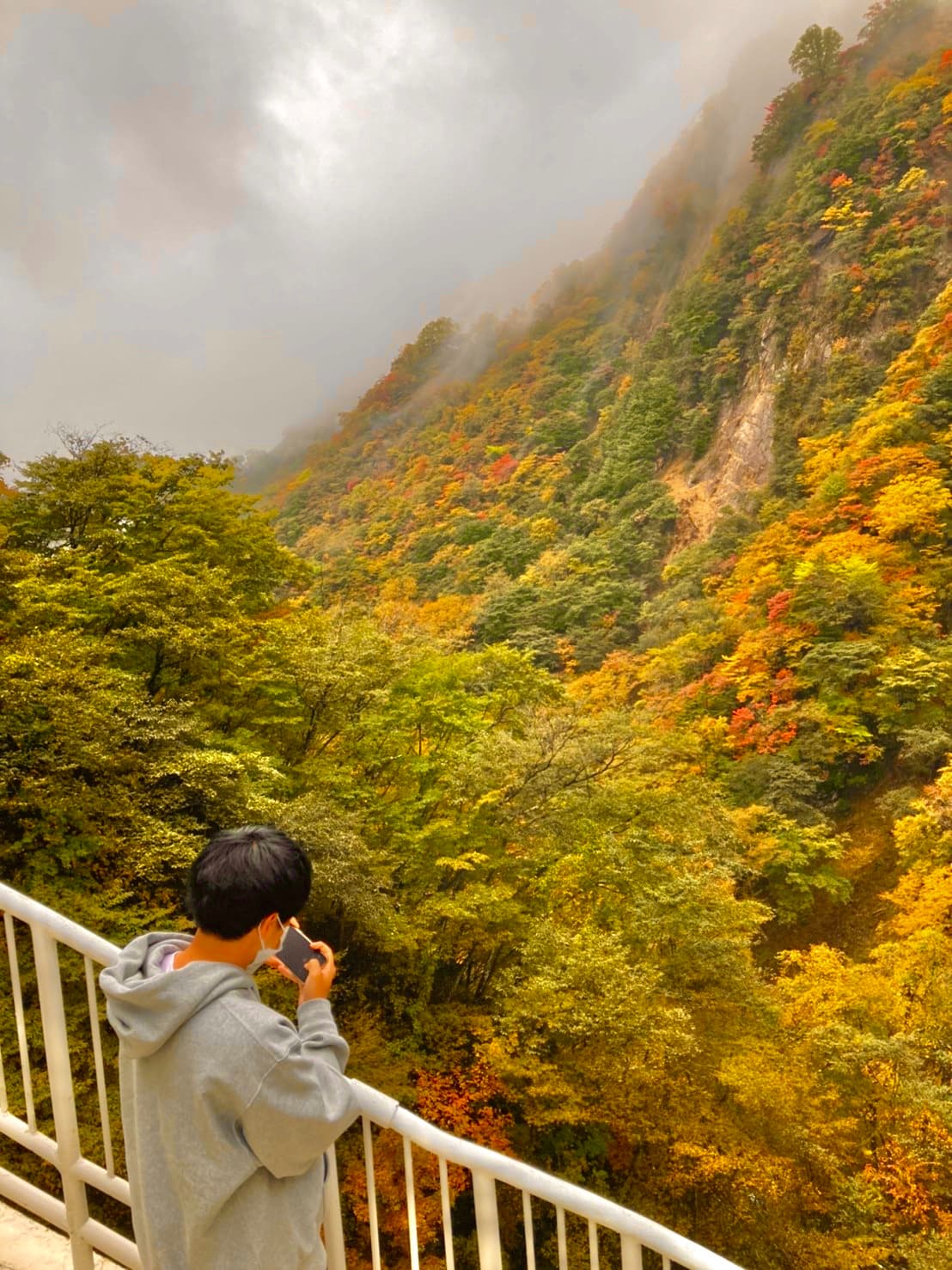
The valley near Kegon Falls — taken on Shota's own visit
エリア
Key Neighbourhoods
Toshogu Shrine Area
東照宮周辺The UNESCO World Heritage core — Toshogu, Futarasan Shrine, and Rinno-ji Temple within a 15-minute walk of each other
Nikko Station & Old Town
日光駅周辺・鉢石Where to eat, sleep, and start the walk up to the shrines — yuba restaurants and the sacred bridge
Lake Chuzenji & Oku-Nikko
中禅寺湖・奥日光A different climate entirely — a volcanic lake, a 97m waterfall, and marshland boardwalks at 1,300m elevation
Kinugawa Onsen
鬼怒川温泉The hot spring town most travellers use as an overnight base — 20 minutes from Nikko by train
グルメ
Must Eat in Nikko
Yuba (Tofu Skin)
湯波Nikko's signature food — the delicate skin that forms on top of simmering soy milk, lifted off in sheets. Buddhist monks at the mountain temples have eaten it for centuries as a protein source without meat. Served as sashimi-style raw sheets, simmered, or fried — far more varied and delicate than the yuba found elsewhere in Japan.
Where: Yuba Sara-honke (near Shinkyo Bridge) · Nikko Yuzawa (old town) · most ryokan kaiseki dinners
budget
¥1,500–¥4,000 (set meal)
Nikko Soba
日光そばBuckwheat noodles grown in Nikko's cold mountain climate, which locals say gives the soba a firmer bite and cleaner flavour than lowland versions. Served hot in winter, cold with dipping sauce (zaru) in warmer months.
Where: Soba restaurants along the old approach road near Shinkyo Bridge
budget
¥900–¥1,800
Yashio Masu (Rainbow Trout)
やしおマスRiver trout farmed in Nikko's clean mountain streams, usually salt-grilled whole over charcoal (shioyaki). A staple of ryokan breakfasts and a simple, honest counterpoint to the ornate shrines up the hill.
Where: Ryokan breakfasts around Kinugawa Onsen and Lake Chuzenji
budget
¥1,200–¥2,500
Yuba Manju
湯波まんじゅうA sweet take on yuba — a thin skin wrapped around sweet bean paste, steamed. Sold as a portable snack and souvenir throughout the old town, a lighter alternative to the usual wagashi.
Where: Souvenir shops along the approach to Shinkyo Bridge
budget
¥150–¥300 each
Goma Dofu (Sesame Tofu)
胡麻豆腐Not tofu at all, technically — ground sesame and kuzu starch set into a dense, silky block. A shojin-ryori (Buddhist temple cuisine) staple served at Nikko's temple-adjacent restaurants, usually with a dab of wasabi or sweet soy.
Where: Temple-area restaurants near Rinno-ji and the Toshogu approach
budget
¥600–¥1,200
日帰り旅行
Day Trips from Nikko
Lake Chuzenji & Kegon Falls
50 min by bus from Tobu Nikko Station (via Irohazaka)
A volcanic lake at 1,269m and a 97m waterfall — the classic pairing with the shrines, and noticeably cooler in summer.
Kinugawa Onsen
20 min by Tobu train from Nikko
The area's main hot spring town, and the easiest place to base an overnight stay with a riverside ryokan.
Nasu Highlands
~2 hrs by train/bus combination
A quieter volcanic highland with its own onsen towns, hiking, and a safari park — for a second night away from the shrine crowds.
Utsunomiya
40 min by JR Nikko Line, on the way back to Tokyo
Japan's self-declared "gyoza capital" — dozens of dumpling specialists near the station, an easy stopover rather than a special trip.
Practical Tips
Toshogu gets genuinely crowded by mid-morning, especially on weekends and during autumn foliage (late Oct–early Nov). Arrive at opening time (8am) to see the Yomeimon gate before the tour buses do.
The Nikko Pass (sold at Tobu Asakusa Station) covers your round-trip train plus unlimited local buses — including the bus up to Lake Chuzenji, which most travellers underestimate the cost of otherwise.
Oku-Nikko (Lake Chuzenji and above) sits at over 1,000m and is noticeably colder than Tokyo — bring a layer even in summer, and check for snow closures November through April.
If you only have time for one mausoleum, locals often recommend Taiyuin over the more famous Toshogu — same craftsmanship, a fraction of the crowds.
Planning your Nikko trip?
Get eSIM coverage before you land, book a local experience, and find the right place to stay.